
Introduction
MappingEducation.com is becoming an increasingly discussed platform in the digital education space, offering structured learning tools and educational mapping solutions for students, teachers, and institutions. In today’s fast-moving academic environment, learners need organized systems that simplify complex topics and improve understanding. That is where MappingEducation.com plays an important role by helping users visualize, plan, and manage educational content in a more effective way.
For beginners, platforms like MappingEducation.com can feel like a new concept at first, but once understood, they offer powerful advantages in learning organization and knowledge structuring. Whether you are a student trying to understand difficult subjects or a teacher building lesson plans, this platform provides a clear and systematic approach.
In simple terms, MappingEducation.com focuses on improving how education is delivered and understood through mapping-based learning systems. It helps break down topics into smaller sections, making it easier for users to learn step by step. In this article, we will explore what MappingEducation.com is, why it is important, how it works, its benefits, risks, common mistakes, and expert tips to use it effectively in real learning environments.
What is MappingEducation.com?
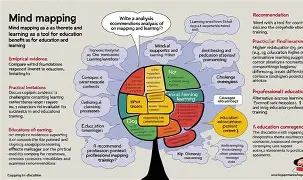
MappingEducation.com is an online education-based platform designed to organize learning content into structured visual or conceptual maps. It focuses on simplifying education by connecting topics, subtopics, and ideas in a logical flow. This method allows learners to understand the relationship between different concepts rather than memorizing isolated information.
At its core, MappingEducation.com acts as a digital learning support system. It helps users create educational maps that represent subjects in a more visual and structured format. For example, instead of reading long paragraphs about a topic, learners can view interconnected nodes that show how ideas are linked.
MappingEducation.com is widely used in academic planning, curriculum structuring, and self-learning. It is especially helpful for students who struggle with traditional learning methods. Teachers also use it to design lesson structures that are easier to deliver and understand.
The main idea behind MappingEducation.com is to improve comprehension through visualization. When learners see how concepts are connected, they can retain information more effectively. This approach transforms complex subjects into easy-to-understand learning paths.
Overall, MappingEducation.com is not just a tool but a modern educational approach that promotes clarity, structure, and deeper understanding of academic content.
Why is MappingEducation.com Important?
MappingEducation.com is important because it changes the traditional way of learning into a more structured and interactive experience. In conventional education systems, students often face difficulty understanding large topics due to lack of organization. MappingEducation.com solves this issue by breaking down content into smaller, connected parts.
One major importance of MappingEducation.com is improved learning clarity. When students see how topics are connected, they understand the subject more deeply instead of just memorizing it. This leads to long-term knowledge retention.
Another key importance is time efficiency. Learners can quickly review entire subjects through mapped structures instead of reading lengthy chapters. This is especially useful during exam preparation.
MappingEducation.com also supports personalized learning. Every learner has a different pace, and this platform allows users to customize their learning maps according to their needs. Teachers can also adapt content based on student understanding levels.
Additionally, it enhances teaching effectiveness. Educators can design structured lesson plans that are easier to explain and follow. This reduces confusion in classrooms and improves student engagement.
In modern digital education, tools like MappingEducation.com are becoming essential because they support interactive, visual, and organized learning systems that match today’s educational demands.
Detailed Step-by-Step Guide
Step 1: Understanding the Platform Structure
The first step in using MappingEducation.com is understanding how the platform is structured. It usually includes topics, subtopics, and connected nodes that form a complete learning map. This structure helps users navigate through educational content easily.
Step 2: Creating a Learning Map
Once you understand the structure, the next step is creating a learning map. Users can select a subject and start breaking it into smaller sections. Each section represents a key idea that connects with other related topics.
Step 3: Organizing Topics Logically
After creating a map, organize topics in a logical sequence. This means arranging concepts from basic to advanced level so that learning becomes smooth and progressive.
Step 4: Adding Supporting Information
MappingEducation.com allows users to add notes, explanations, and examples under each topic. This helps in strengthening understanding and improving revision efficiency.
Step 5: Reviewing and Updating the Map
Regular review is important. Users should update their learning maps whenever they learn new information. This keeps the content relevant and accurate.
Step 6: Using Maps for Revision
Finally, use the created maps for revision purposes. Instead of reading entire textbooks, learners can quickly go through structured maps for better recall and understanding.
Benefits of MappingEducation.com
- Improves understanding of complex topics through visualization
- Enhances memory retention by structured learning
- Saves time during study and revision sessions
- Helps teachers create better lesson plans
- Supports personalized learning experience
- Makes learning more interactive and engaging
- Reduces dependency on traditional rote memorization
- Encourages critical thinking and concept clarity
Disadvantages / Risks
- Requires initial learning time to understand the system
- May not suit learners who prefer traditional reading methods
- Over-reliance can reduce textbook reading habits
- Limited effectiveness if not updated regularly
- Internet or device dependency for access
Common Mistakes to Avoid
Many users fail to get full benefit from MappingEducation.com due to common mistakes. One major mistake is creating overly complicated maps. When too many details are added, the structure becomes confusing instead of helpful.
Another mistake is ignoring regular updates. Learning is a continuous process, and outdated maps can reduce effectiveness. Users should always keep their maps updated with new information.
Some learners also fail to connect topics properly. Without logical connections, the map loses its purpose. Each concept should be linked in a meaningful way.
Lastly, relying only on mapping without practicing actual learning exercises can limit overall understanding. It should be used as a support tool, not a replacement for study.
FAQs
1. What is MappingEducation.com used for?
MappingEducation.com is used to organize educational content into structured learning maps that help improve understanding and memory retention.
2. Is MappingEducation.com suitable for beginners?
Yes, it is designed for beginners as well as intermediate learners. Its simple structure makes it easy to understand complex topics.
3. Can teachers use MappingEducation.com?
Yes, teachers can use it to create lesson plans, organize subjects, and improve classroom teaching methods.
4. Does MappingEducation.com improve learning speed?
Yes, it improves learning speed by presenting information in a structured and visual format, reducing time spent on long reading sessions.
5. Is it better than traditional studying?
It is not a replacement but an improvement tool. It enhances traditional studying by making concepts clearer and easier to revise.
6. Do I need technical skills to use it?
No advanced technical skills are required. Basic understanding of digital tools is enough to start using it effectively.
Expert Tips & Bonus Points
Experts suggest starting with simple maps before moving to complex structures. Beginners should focus on one subject at a time instead of multiple topics together.
Another important tip is to keep maps visually clean and organized. Too many connections can reduce clarity.
Using color coding and labels (if available) can further improve understanding and revision speed.
It is also recommended to combine MappingEducation.com with regular reading and practice exercises. This combination gives the best learning results.
Consistency is key. Regular use of structured maps improves long-term understanding and academic performance.
Conclusion
MappingEducation.com is a modern educational approach that transforms how students and teachers interact with learning content. By focusing on structured mapping, it helps break down complex subjects into simple, connected ideas. This improves clarity, understanding, and retention.
For beginners, the platform offers an easy way to start organized learning without feeling overwhelmed. For educators, it provides a powerful method to design clear and effective lesson plans. As education continues to evolve digitally, tools like MappingEducation.com are becoming more valuable in improving learning outcomes.
Although it has some limitations, its benefits far outweigh the drawbacks when used correctly. With proper understanding, regular updates, and balanced usage, learners can significantly improve their academic performance.
Meta Description (155 chars): Learn MappingEducation.com features, uses, benefits, and step-by-step guide for beginners to improve digital learning and education planning.