
A home workshop can become one of the most useful areas in the house. It may support basic vehicle care, motorcycle maintenance, furniture repairs, electronics projects, or weekend DIY jobs. Yet the space quickly becomes frustrating when tools are hard to find, charging cables cover the bench, and stored items block the equipment you need.
That is why more homeowners now treat home workspace organization as a practical system rather than a one-time cleanup. The goal is not to create a showroom. It is to make everyday work safer, faster, and less stressful. With clear activity zones, accessible storage, better lighting, and a few technology-friendly upgrades, even a compact garage can become an efficient workspace. The strongest results usually come from simple changes based on how the area is actually used.
Start With the Work You Do Most Often
Before buying cabinets or wall panels, list the tasks that regularly happen in the space. A homeowner who handles basic automotive maintenance needs a different layout from someone who mainly repairs appliances or works on woodworking projects.
Common activities may include:
- Checking tire pressure and vehicle fluids
- Cleaning or repairing a motorcycle
- Charging cordless tools
- Organizing detailing products
- Completing household repairs
- Working on electronics
- Storing seasonal equipment
This review prevents a common mistake: choosing storage products before understanding the workflow. Good home workspace organization begins with function. Frequently used tools should stay close to the main work area, while seasonal or rarely used items can be stored higher or farther away.
Notice where work naturally begins. If you usually unpack parts near the garage door, that area may need a small staging shelf rather than another large cabinet.
Divide the Garage Into Clear Work Zones
An efficient garage is easier to maintain when every section has a defined purpose. Instead of treating it as one large storage room, divide it into smaller working zones.
Main Work Zone
This is where repairs, assembly, and maintenance happen. It should include a stable surface, task lighting, nearby power access, and commonly used tools. A properly planned organized garage workspace helps separate active projects from general household storage.
Tool Zone
Group hand tools, power tools, sockets, drill bits, and accessories by type or task. Related items should live together so they are easier to find and return.
Automotive Zone
Keep vehicle fluids, jumper cables, tire tools, cleaning products, and diagnostic equipment in one area. Store chemicals safely, away from heat, children, pets, and anything that could create a spark.
Charging Zone
Cordless tools, flashlights, battery maintainers, scan tools, and portable vacuums often compete for outlets. A dedicated charging shelf keeps batteries visible and prevents chargers from taking over the workbench.
Many useful garage workspace ideas follow this zoning approach. The garage feels calmer because unrelated items no longer compete for the same drawer, shelf, or countertop.
Use Walls Before Filling the Floor
Floor space is valuable, especially when the garage must still accommodate a car, motorcycle, bicycle, or lawn equipment. Walls often provide the easiest opportunity for improvement.
Pegboards, slatwall systems, rails, magnetic strips, and shallow shelves can keep tools visible without reducing walking space. Long-handled items, extension cords, and hoses can be mounted vertically. Small labeled bins can hold screws, clips, fuses, and other parts that are easily lost.
The best smart storage solutions usually combine open and closed storage. Open storage works well for tools used every week. Closed cabinets are better for chemicals, expensive equipment, dusty items, and supplies that make the room look cluttered.
Avoid covering every wall without a plan. Leave open space for lighting, power strips, instruction sheets, or future equipment. An organized workshop should remain adaptable rather than packed from floor to ceiling.
Build the Workbench Around Real Tasks
A workbench is not useful simply because it is large. Its height, depth, surface, and storage should match the work being performed.
Light repairs and electronics may only require a shallow bench. Mechanical work, larger parts, or power tools may need a deeper and more durable surface. The working height should also reduce bending and shoulder strain.
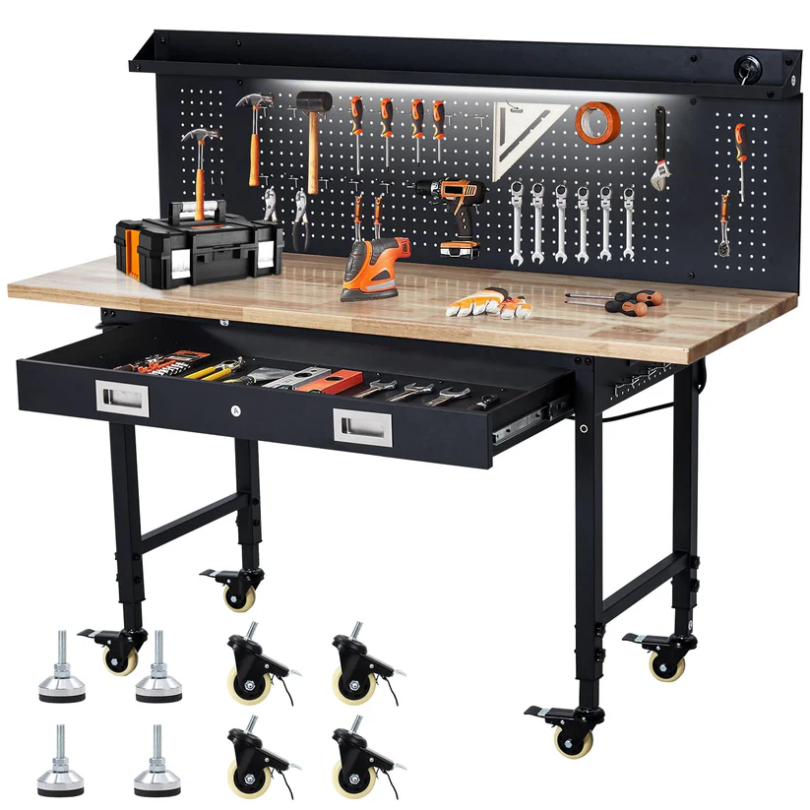
Useful workbench features include:
- Drawers for measuring and marking tools
- A lower shelf for heavier equipment
- A vise or clamping area
- A replaceable protective top
- Integrated power access
- Focused task lighting
- A tray for small parts
One of the most practical garage workspace ideas is to keep part of the bench permanently clear. This gives you a ready surface for an unexpected repair instead of forcing you to move boxes before every task.
Create a Safer Charging and Technology Setup
Modern home workshops contain more electronics than ever. Cordless tools, battery analyzers, smart chargers, tablets, cameras, and portable lights all need safe power access.
Mount power strips where plugs are easy to reach without stretching cords across walkways. Keep chargers away from liquids, metal shavings, and areas where sparks may occur. Label batteries by tool family or voltage, and remove damaged packs from use.
A simple charging shelf can include cable clips, labeled charger positions, and a tray for spare batteries. Technology should support home workspace organization, not create another layer of clutter. Any automated equipment should follow the manufacturer’s safety instructions.
Choose Storage That Is Easy to Maintain
A storage system fails when putting something away takes too much effort. Deep mixed bins and tightly packed shelves may look tidy at first, but they slow down everyday work.
Effective smart storage solutions reduce decisions. A wrench should have one clear location. Sandpaper should be grouped by grit. Automotive fluids should be separated by type. Frequently used fasteners should be visible and labeled.
Transparent bins work well for small parts, while drawer dividers help organize sockets, bits, blades, and electrical supplies. Avoid broad labels such as “miscellaneous,” which often become permanent clutter zones.
For an organized workshop, retrieval speed matters more than storage density. Common items should be easy to find and return without opening several containers.
Improve Lighting for Accuracy and Safety
General garage lighting is often not enough for detailed mechanical or repair work. Shadows under shelves, vehicles, and cabinets can hide dropped parts or make careful tasks difficult.
Use several types of lighting:
- Overhead lighting for the whole room
- Focused lighting above the workbench
- Portable lights for vehicle work
- Small lights inside deep cabinets
Position task lights so your hands and body do not cast shadows over the work area. Good lighting is one of the most overlooked garage workspace ideas, yet it improves accuracy, reduces eye strain, and makes cleanup easier.
Make Cleanup Part of the Workflow
An organized space is easier to maintain when cleanup is built into the process. Keep a waste bin, shop towels, recycling container, and cleaning supplies near the main work zone.
A five-minute reset after each project can include:
- Returning tools
- Wiping the bench
- Coiling cables
- Removing packaging
- Checking for spills
- Restocking common supplies
This small habit protects the organized workshop from gradually returning to its previous condition. It also makes the next project easier to begin.
Frequently Asked Questions
What is the first step in organizing a garage workspace?
Identify the tasks performed most often. Then group tools and supplies around those activities before buying new cabinets, shelves, or wall systems.
How can I organize a small garage workshop?
Use vertical wall space, shallow storage, folding surfaces, and mobile carts. Keep only frequently used items near the main bench.
Should tools be stored in drawers or on the wall?
Frequently used tools are often easier to access on a wall panel. Expensive, sharp, or less frequently used tools may be better protected inside drawers or cabinets.
What storage works best for automotive tools?
Labeled socket organizers, drawer dividers, wall-mounted holders, chemical cabinets, charging shelves, and rolling carts are especially practical.
How often should a home workshop be reorganized?
Complete a brief reset after each project and review the full layout every three to six months. Remove broken items, relocate rarely used equipment, and update labels.
Conclusion
Smart homeowners are not improving their garages by adding storage everywhere. They are improving home workspace organization by making tools easier to reach, separating activities into practical zones, and keeping enough open space to work safely. Strong lighting, a dedicated charging area, vertical storage, and mobile tool carts can make a garage far more useful without requiring a complete renovation.
The most effective garage workspace ideas are simple and specific to the household. Start with the tasks you perform most often, give every important item a clear location, and make cleanup part of the routine. These habits create an organized workshop that is easier to maintain, more comfortable to use, and ready whenever the next repair or project begins.