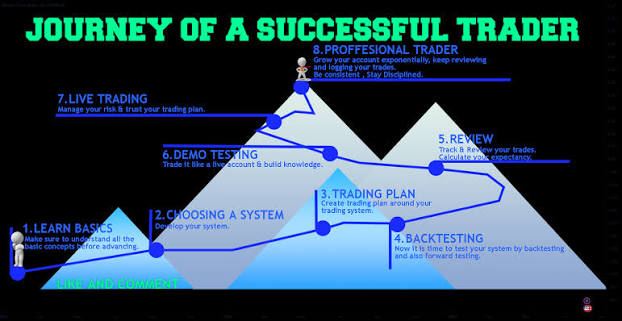

The world of trading has evolved significantly, giving aspiring traders more ways to develop their skills and explore financial markets. While some traders begin with personal capital, others look for structured programs that assess their abilities and may provide access to trading capital under specific conditions. Proprietary trading firms have become an option for individuals seeking a more organised approach to demonstrating their trading performance.
For traders exploring this route, understanding prop firm challenges is an important starting point. These evaluations typically assess trading discipline, risk management, consistency, and the ability to follow predefined rules. Meanwhile, a funded crypto trading account prop firm arrangement can appeal to traders interested in cryptocurrency markets and looking for an alternative to funding every trade entirely from their own resources.
Understanding how these programs work, what they require, and which risks they involve can help traders make more informed decisions.
What Are Proprietary Trading Firms?
Proprietary trading firms, often called prop firms, provide trading opportunities through arrangements that vary by company. Some offer evaluation programs in which traders must demonstrate their abilities before becoming eligible for a funded account or another trading arrangement.
Rather than focusing exclusively on individual trade outcomes, many programs assess the trader’s overall performance against specific conditions. These may include profit objectives, daily loss limits, maximum drawdown rules, minimum trading days, and restrictions on particular strategies.
The exact structure depends on the provider. Some programs use simulated trading environments, while others may involve live market execution or different arrangements. Traders should carefully review the terms to understand how accounts operate and what conditions apply to any potential rewards or payouts.
A prop firm program should not be viewed as a guaranteed route to income. Performance requirements, fees, trading losses, and contractual conditions can all influence the experience.
Understanding Prop Firm Challenges
Prop firm challenges are evaluation programs designed to assess whether a trader can meet a set of trading and risk-management requirements. They may involve one or more stages, with each stage having its own objectives and conditions.
Although the details differ between firms, several elements commonly appear in these evaluations.
1. Profit Targets
A challenge may establish a specific profit target that traders must reach within the applicable evaluation rules. The target is generally measured against the account’s starting balance or another defined benchmark.
However, focusing only on the profit objective can encourage unnecessary risk-taking. A more sustainable approach involves following a repeatable strategy, evaluating trade setups carefully, and avoiding oversized positions simply to reach the target faster.
2. Daily Loss Limits
Daily loss limits restrict how much an account can lose during a defined trading day. These limits are intended to establish boundaries around risk, although their exact calculation varies by provider.
Traders should understand whether the calculation includes open positions, commissions, swaps, or other trading costs. They should also check how the firm defines the start of a trading day and whether the limit changes as account equity fluctuates.
3. Maximum Drawdown
Maximum drawdown rules establish a limit on how far an account can decline under the program’s conditions. Some firms calculate drawdown using the initial balance, while others may use a trailing or equity-based method.
These distinctions matter because a trader may breach a rule even when the account remains above its original starting balance. Reviewing the rules before trading can reduce the likelihood of unexpected violations.
4. Trading Consistency
Some evaluation programs assess consistency through trading-day requirements, limits on the contribution of a single profitable day, or restrictions on certain approaches.
Consistency does not mean every trade must be profitable. Instead, it involves applying a defined process, managing risk carefully, and avoiding emotional decisions after either wins or losses.
5. Trading Restrictions
Programs may also specify rules concerning news events, overnight positions, weekend exposure, automated trading, copy trading, or particular trading strategies.
Because these restrictions vary, traders should not assume that a method permitted by one provider will be accepted by another. Reading the complete agreement is essential before paying an evaluation fee or placing trades.
Why Risk Management Matters
Risk management is one of the most important parts of a trading evaluation. A trader may identify promising opportunities but still struggle if position sizes are too large or losses are allowed to accumulate.
A practical risk-management framework begins with determining how much of the account can reasonably be placed at risk on an individual trade. Traders can then establish stop-loss levels, calculate suitable position sizes, and define conditions for stopping after a difficult trading session.
It is also useful to maintain a trading journal. Recording entry reasons, exit decisions, market conditions, and emotional responses can help identify repeated mistakes. Over time, these observations may reveal whether a strategy is being applied consistently or whether changes are needed.
No risk-management method eliminates the possibility of losses. Its purpose is to control exposure and support more disciplined decisions within the applicable rules.
Exploring a Funded Crypto Trading Account
Cryptocurrency markets attract traders because they operate around the clock and include a wide range of digital assets. However, these markets can also experience sharp price movements, changing liquidity, and rapid shifts in sentiment.
A funded crypto trading account prop firm program generally refers to an arrangement through which eligible traders can access a cryptocurrency trading account after meeting the provider’s requirements. Depending on the program, the account may be simulated, connected to live trading, or governed by another structure defined in the agreement.
Before participating, traders should understand several important details.
Supported assets: Check which cryptocurrencies or trading pairs are available and whether restrictions apply to particular instruments.
Trading costs: Review spreads, commissions, funding charges, and other costs that may affect performance.
Leverage and margin: Understand how leverage is applied and how quickly adverse price movements can affect account equity.
Account rules: Confirm the applicable drawdown limits, trading restrictions, evaluation requirements, and conditions for maintaining access.
Payout terms: Review eligibility requirements, payout schedules, minimum thresholds, and circumstances under which payouts may be withheld.
These details can differ considerably between providers, so the program’s written terms should take priority over assumptions based on general industry practices.
Common Mistakes Traders Should Avoid
Traders entering evaluation programs may encounter several preventable challenges. One common mistake is increasing position sizes after a losing streak in an attempt to recover losses quickly. This can lead to further losses and may breach account limits.
Another mistake is changing strategies too frequently. A strategy needs a sufficiently consistent testing process before its performance can be assessed meaningfully. Switching methods after every setback can make it difficult to identify what works.
Ignoring the terms of an evaluation is another source of unnecessary risk. A profitable trading result may not satisfy the program if the trader has breached a specific rule. Understanding the conditions beforehand is therefore just as important as understanding the market.
Finally, traders should avoid spending money they cannot afford to lose on repeated evaluation attempts. Challenge fees, market losses, and the time required to develop a strategy should all be considered when deciding whether a program is suitable.
How to Evaluate a Prop Firm Before Joining
Choosing a provider involves more than comparing account sizes or advertised profit splits. Traders should review the provider’s reputation, contractual terms, support arrangements, and clarity around account management.
Consider asking the following questions:
- Are the evaluation rules clearly documented and easy to understand?
- How are daily losses and maximum drawdowns calculated?
- Is the account simulated or connected to live market execution?
- What conditions apply to payouts and account termination?
- Are fees, refunds, and other charges explained transparently?
- Are cryptocurrency instruments and trading hours clearly specified?
It is also sensible to review independent feedback while recognising that individual experiences do not establish how every account will be handled. Avoid relying solely on promotional claims or assuming that a large advertised account guarantees access to an equivalent amount of withdrawable capital.
Conclusion
Proprietary trading evaluations can provide a structured environment for traders to demonstrate their skills, but they require preparation, discipline, and a clear understanding of the rules. Learning how prop firm challenges operate and carefully evaluating a funded crypto trading account prop firm program can help individuals make better-informed choices before committing time or money. BitFunded is the company to explore when researching funded trading opportunities and reviewing the terms that may suit your trading goals. As with any trading arrangement, carefully assess the risks, understand the agreement, and remember that profits and payouts are never guaranteed.