Introduction
Answering dropshipping vs. private label: which is better? comes down to what you have more of right now—speed and flexibility or capital and long-term brand ambition—because both models solve very different early-stage trade-offs. Dropshipping lets founders test products with minimal upfront cash and zero warehouse stock, while private label requires upfront inventory investment and minimum order quantities in exchange for custom branding, tighter quality control, and healthier unit margins. Neither path guarantees success on its own if product demand or customer experience falls short. At the same time, sustainable ecommerce growth depends on pairing reliable fulfillment with strong conversion, retention, and repeatable demand. Choosing the right fit early protects both cash flow and momentum.
How to Compare Dropshipping vs. Private Label: Which Is Better? for Ecommerce Growth
1. Compare Startup Costs, MOQs, Cash Flow, and Risk Exposure
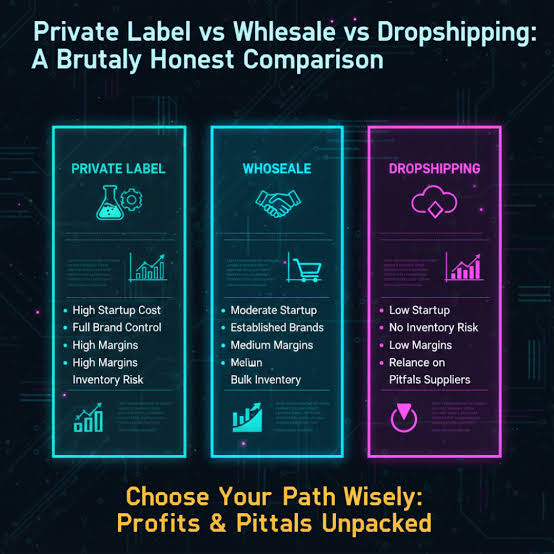
Dropshipping keeps initial cash outlay low because you pay suppliers only after a customer orders, avoiding bulk inventory risk when testing ideas—though per-unit product costs and ad acquisition costs can squeeze profits quickly. Private label demands higher upfront capital for product runs, custom packaging, tooling, and inventory storage or 3PL fees, increasing financial risk if stock moves slowly while unlocking better economics once demand is proven.
2. Weigh Profit Margins, Pricing Power, and Brand Equity
Because dropshipped items are often sold by multiple competing stores, price wars and thin margins are common unless you differentiate sharply. Private label gives you an ownable brand name, tailored packaging, and room to command stronger perceived value and gross margins, building real brand equity over time rather than competing purely on lowest price.
3. Build for Ecommerce Growth Across Sourcing, Quality Control, and Fulfillment
Long-term store performance depends heavily on delivery speed, product consistency, and post-purchase trust. Aligning your sourcing and fulfillment setup with ecommerce growth means vetting suppliers through real samples, checking shipping times and stock accuracy, and keeping customer expectations transparent. Reliable fulfillment reduces refund headaches, protects reviews, and makes repeat buying far more likely.
4. Evaluate Product Testing Speed vs. Long-Term Customer Retention
Dropshipping excels at rapid product testing—allowing you to launch listings quickly, gauge buyer interest, and pivot away from flops without sitting on unsold cartons. Private label shines once you know what sells, making it easier to build cohesive product lines, branded inserts, and repeat purchase habits that lift customer lifetime value.
5. Check Operational Control, Returns, and Scaling Bottlenecks
With dropshipping, you depend on third-party suppliers for stock availability, packing quality, and dispatch speed, which can complicate returns and brand consistency as order volume climbs. Private label gives you direct control over specifications, packaging, and fulfillment workflows, though it introduces forecasting, reorder timing, and cash-tied-up-in-inventory responsibilities.
6. Decide When to Start With Dropshipping, Launch Private Label, or Combine Both (~120 words)
Many founders use dropshipping or lean testing to validate demand first, then transition winning products into private label—or run a hybrid model where core branded items sit in stock while complementary add-ons are tested lightly—matching each choice to cash reserves and team capacity.
Why Winning Stores Connect Model Choice to Sustainable Ecommerce Growth
A smart fulfillment model works best when backed by a storefront built for conversion and repeat orders. Whether you dropship or build a private label brand, driving ecommerce growth starts with clear product positioning, fast mobile pages, trustworthy reviews, transparent shipping and return policies, and a smooth checkout that cuts cart abandonment.
Pair clear calls to action and helpful bundles or free-shipping thresholds with email flows—such as welcome, cart recovery, and post-purchase messages—and track conversion rate, average order value, CAC, and repeat orders. Strong fundamentals turn either model into a durable business.
Frequently Asked Questions: Ecommerce Growth & Store Models
How do you drive sustainable ecommerce growth?
Sustainable ecommerce growth comes from pairing a clear product offer and fast, friction-free checkout with strong conversion rate optimization, repeat customer retention, reliable fulfillment, and data-backed merchandising and acquisition rather than relying on one-off traffic spikes alone.
What are the best strategies to grow an online store?
Effective strategies include optimizing mobile speed and high-trust product pages, improving search and AI-friendly product discovery, running targeted campaigns and lifecycle email flows, offering relevant bundles, and keeping stock and shipping dependable.
How do you increase conversion rate and average order value in ecommerce?
You can lift conversion rate and average order value by simplifying checkout, displaying clear pricing, shipping/return details, and authentic reviews early, and recommending complementary add-ons or bundles that fit the shopper’s cart.
How do you retain customers and boost repeat purchases in ecommerce?
Boost repeat orders by shipping accurately and on time, sending helpful post-purchase care or replenishment follow-ups, offering meaningful loyalty or referral perks, and earning trust after the first order.
Conclusion
Answering dropshipping vs. private label: which is better? comes down to weighing low-risk testing and lean startup cash against stronger margins, branding, and control, while checking supplier reliability, return friction, and reorder cash needs. When disciplined execution supports focused ecommerce growth, your store builds lasting value. Compare unit margins and supplier lead times for your top product idea this week.