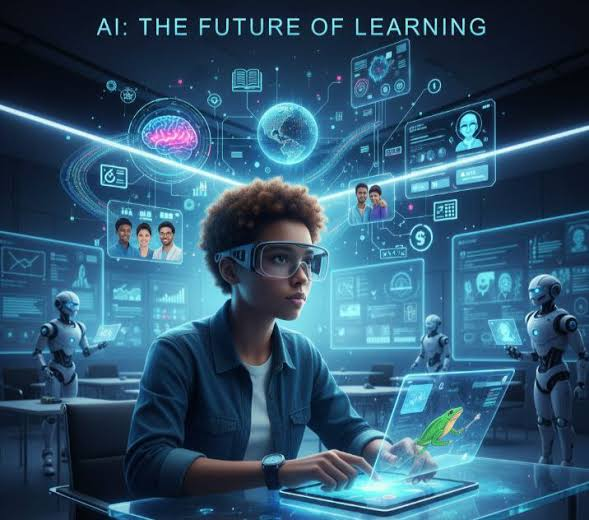

Artificial intelligence has moved far beyond a futuristic idea discussed only by researchers and large technology companies. Today, AI is part of everyday life. People use it to research topics, organize information, write content, analyze data, create images, improve customer service, and manage routine tasks. As these technologies become more accessible, the need for reliable information has grown just as quickly. Readers now need digital platforms that clearly and usefully explain new tools, trends, and practical applications. Resources such as DigitalConnectMag.com CO can help readers explore topics related to artificial intelligence, software, business, websites, digital marketing, and the changing digital world.
The rise of AI resources is changing more than the tools people use. It is changing how people approach learning, productivity, creativity, problem-solving, and decision-making. The most important development is not simply that machines can complete certain tasks faster. It is that people can now access support, information, and digital capabilities that were once available only to specialists.
Understanding how to use these resources effectively is becoming an important skill for students, professionals, business owners, marketers, creators, and everyday internet users.
AI Is Making Information More Accessible
One of the biggest advantages of modern AI technology is its ability to make information easier to access and understand.
In the past, learning a complex topic often required searching through many websites, reading long documents, watching several videos, and comparing different explanations. That process can still be valuable, but it is often time-consuming.
AI-powered resources can help users:
- summarize large amounts of information;
- explain difficult topics in simpler language;
- compare different ideas;
- organize research;
- identify key points;
- create study plans;
- generate useful questions for deeper learning.
This does not mean people should accept every AI-generated answer without checking it. Artificial intelligence can make mistakes, misunderstand context, or provide incomplete information. However, when used carefully, it can help people begin their research more efficiently.
The real benefit is not replacing traditional research. It is reducing the amount of time spent on repetitive information gathering so that more attention can be given to understanding, analysis, and decision-making.
Learning Is Becoming More Personalized
Traditional education often follows a fixed structure. A teacher explains a topic once, a textbook presents information in one way, and every student is expected to learn at roughly the same pace.
AI resources are helping change that model.
A learner who does not understand a technical explanation can ask for a simpler version. Someone who already understands the basics can request a more advanced explanation. A student can ask for examples, practice questions, summaries, comparisons, or step-by-step guidance.
This makes learning more flexible.
For example, a person learning digital marketing may struggle with search engine optimization. Instead of reading the same definition repeatedly, the learner can ask for:
- a simple explanation of SEO;
- a real-world example;
- a comparison between on-page and off-page SEO;
- a practice exercise;
- a beginner-friendly checklist.
The same topic can be explored in several ways until it becomes easier to understand.
This personalized approach is especially useful for self-learners. People who are studying outside formal institutions can use AI-powered learning tools to build skills at their own pace.
However, personalized learning still requires discipline. A tool can provide information, but the learner must still practice, question, verify, and apply what has been learned.
The Workplace Is Becoming More Efficient
AI resources are also changing how people work.
Many employees spend a large part of their day completing repetitive tasks. These may include organizing notes, writing routine messages, summarizing meetings, preparing basic reports, reviewing documents, or collecting information.
AI can assist with many of these activities.
The goal is not always to remove the human from the process. In many cases, the best results come from combining machine speed with human judgment.
A professional might use AI to create the first draft of a document, but then improve the tone, verify the facts, and adapt the message for the intended audience.
A marketer might use an AI tool to organize keyword ideas, but still needs to understand search intent and audience needs.
A business owner might use automation to respond to common customer questions, while keeping human support available for more complicated problems.
This combination can improve productivity because people spend less time on repetitive work and more time on tasks that require experience, communication, strategy, and creativity.
AI Resources Are Changing Research
Research has traditionally required a great deal of manual work.
A person may need to search for different sources, collect notes, compare information, identify patterns, and then organize everything into a useful format.
AI can make parts of this process faster.
Modern research tools can help users:
- generate starting questions;
- identify related topics;
- summarize documents;
- organize notes;
- compare arguments;
- find patterns in information;
- create structured outlines.
These capabilities are useful in many areas, including education, content creation, business planning, product research, and professional development.
Still, speed should not be confused with accuracy.
A fast answer is not automatically a correct answer. Strong research still requires source checking, logical thinking, and careful comparison. Users should treat AI as a research assistant rather than a final authority.
This distinction is important because the value of information depends on its accuracy, context, and relevance.
Creativity Is Becoming More Collaborative
The influence of artificial intelligence is especially visible in creative work.
Writers can use AI to brainstorm ideas. Designers can explore visual directions. Video creators can organize scripts. Marketers can develop campaign concepts. Developers can use coding assistants to identify problems or generate basic structures.
This creates a new kind of creative workflow.
Instead of starting with a completely blank page, a person can begin with a rough idea and use AI to explore possibilities.
For example, a writer planning an article may ask for different angles on a topic. The writer can then select the strongest direction, add original experience, conduct research, and create a final piece.
A designer may generate several visual concepts before developing the final design manually.
A business may use AI to brainstorm campaign ideas and then choose the one that best fits its audience.
The human role remains essential.
Artificial intelligence can produce options, but people provide judgment, originality, emotion, experience, and cultural understanding. The strongest creative results often come from using technology as a collaborator rather than allowing it to control the entire process.
Small Businesses Can Access More Powerful Tools
One of the most significant effects of AI is that advanced digital capabilities are becoming available to smaller businesses.
Large companies have traditionally had an advantage because they could afford bigger teams, expensive software, and specialized experts.
Today, a small company can use digital tools for:
- customer support;
- content planning;
- data organization;
- market research;
- website improvement;
- email communication;
- workflow automation;
- sales support.
This does not make every small business equal to a large corporation. Resources, experience, and strategy still matter.
However, the gap can become smaller.
A small team can now complete certain tasks that previously required several employees. This gives business owners more time to focus on customers, products, partnerships, and growth.
The businesses that benefit most are usually not the ones using the largest number of tools. They are the ones choosing tools carefully and connecting them to clear business goals.
Technology should solve a real problem. Using AI only because it is popular can lead to wasted time, unnecessary costs, and complicated workflows.
Digital Marketing Is Becoming More Data-Driven
Artificial intelligence is also changing online marketing.
Marketers now have access to tools that can help analyze large amounts of information and identify useful patterns.
AI can assist with:
- audience research;
- content ideas;
- keyword grouping;
- customer behavior analysis;
- email personalization;
- advertising optimization;
- performance reporting.
These capabilities can help marketers make more informed decisions.
However, successful marketing still depends on understanding people.
A tool can identify patterns, but it may not fully understand why a person trusts one brand and ignores another. It cannot automatically create a genuine reputation or strong relationship with an audience.
Brands still need to provide value.
Useful content, good customer experiences, clear communication, and credibility remain important. AI can support these activities, but it cannot replace the need for a meaningful strategy.
The Quality of AI Resources Matters
As AI becomes more popular, the number of tools, guides, websites, videos, and online opinions continues to grow.
This creates a new problem: information overload.
People no longer struggle only because information is difficult to find. They also struggle because there is too much of it.
Some resources are useful. Others repeat the same basic information. Some exaggerate what AI can do. Others promote tools without explaining their limitations.
This is why users need to evaluate digital resources carefully.
A useful AI resource should have several qualities.
Clear Explanations
Good information should be understandable. Complex topics should not be made more confusing through unnecessary technical language.
Practical Examples
Readers should be able to see how a concept works in a real situation.
Balanced Information
A useful resource should discuss both benefits and limitations.
Strong Organization
Information should be easy to scan, understand, and apply.
Relevance
The content should address real questions instead of simply repeating popular trends.
The quality of the information people consume can directly influence the quality of their decisions.
Human Judgment Is More Important Than Ever
One of the biggest misunderstandings about AI is the belief that better technology reduces the need for human thinking.
In reality, the opposite may be true.
As more information becomes available, people need stronger judgment.
Users need to ask:
- Is this information accurate?
- What source supports this claim?
- Does the answer make sense in this situation?
- Is important context missing?
- What could happen if this information is wrong?
These questions are essential.
AI can create a confident answer even when the answer is incomplete. It can generate professional-looking content that still requires editing. It can provide suggestions that do not fit a specific audience or situation.
Human review is necessary because people understand consequences, relationships, emotions, goals, and context in ways that automated systems may not.
The future of AI is not only about smarter machines. It is also about people learning how to use powerful tools responsibly.
Digital Skills Are Becoming Essential
Knowing how to use digital tools is becoming an increasingly important part of modern education and employment.
In the past, basic computer skills were enough for many jobs. Today, people are expected to work with cloud platforms, communication tools, digital documents, analytics systems, and automated workflows.
AI literacy is becoming part of this broader skill set.
AI literacy does not mean someone must become a programmer or machine learning engineer.
For many people, it simply means understanding:
- what AI can do;
- what it cannot do;
- how to ask better questions;
- how to verify information;
- how to protect sensitive data;
- how to use technology responsibly.
These skills can help people become more confident users of technology.
The people who succeed in an AI-supported world may not be those who know every tool. New tools appear constantly.
The stronger advantage is knowing how to learn, evaluate, adapt, and solve problems.
The Future Will Be About Smarter Use, Not More Tools
The digital world often encourages people to search for the newest platform, application, or trend.
However, using more technology does not automatically create better results.
A person with ten poorly chosen tools may be less productive than someone using two tools effectively.
The future of AI adoption will likely depend on integration.
People and businesses will need to decide where artificial intelligence provides real value and where human involvement remains more effective.
For example:
- automate repetitive work, but review important decisions;
- use AI for ideas, but add original knowledge;
- summarize information, but verify important facts;
- improve efficiency, but protect privacy;
- use data, but consider human needs.
This balanced approach is more sustainable than blindly automating everything.
AI should make work more useful, not simply faster.
Conclusion
Artificial intelligence is changing how people learn, work, create, research, and manage digital information. It is making advanced tools more accessible and giving individuals and businesses new ways to improve productivity.
At the same time, the rapid growth of AI has created new responsibilities. Users must learn how to evaluate information, protect privacy, verify important claims, and combine automation with human judgment.
The most successful users of AI will not be the people who depend on technology for every decision. They will be the people who understand when to use it, how to question it, and where their own experience still matters most.
As digital tools, software, business technology, and online platforms continue to evolve, reliable information will remain essential. Readers who want to explore practical insights into these changing areas can visit DigitalConnectMag.com CO for more information about AI, software, business, websites, digital marketing, and the wider digital world.